

When summer is in full bloom, it’s hard to imagine a dark, dreary winter ahead. But there is no better way to enjoy indoor plants through the fall and winter months than in a terrarium or glass dish garden.
If you enjoy beautiful rose bushes in your summer garden, consider miniature roses for an indoor terrarium plant. And if the outdoor varieties are more work than you care for, this miniature version is easy to care for.
Gardening in or under glass creates an environment with a balance of air, light, soil, moisture and humidity that nurtures plants with little maintenance. A fish bowl can be used as a starter garden and craft stores carry large brandy snifters and cloches that are perfect containers. Whatever you choose, the container must be very clean to prevent disease.
The key to a successful terrarium garden is choosing the right plant or combination of plants. If you are using more than one plant in your garden, be sure to select plants with similar needs with regard to light, humidity, soil and water. You can create desert gardens of small cacti and succulents, a woodland setting of ferns and woody plants, or a single flowering plant for its color. When you purchase your plants, take a minute at the garden center to arrange the plants, to get an idea of how many you’ll need for your container. Don’t overcrowd! The plants need room for circulation, and you want to enjoy each one in the container. Also consider any additional items you may want to add, like stones or a small statue.
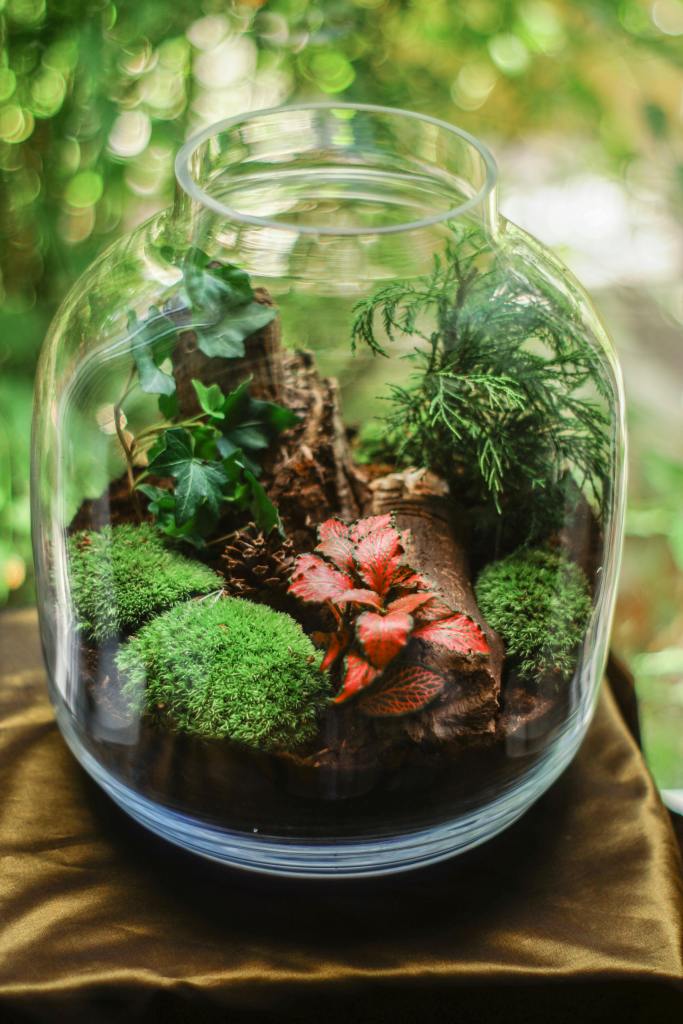
Depending on how you will view the terrarium, place the taller plants to the back or in the center, arranging others by height for best viewing. Keep this in mind when you’re shopping, so you have a nice assortment of colors, textures, and leaf sizes.
When you’re ready to start putting your terrarium together, get some rocks, small stones or gravel, driftwood, a small decorative figurine or other objects. You’ll need crushed charcoal and a dry potting soil in addition to your plants and other objects. You can also add a layer of sphagnum moss to the bottom and around the sides of the garden for a woodsy look. Add a shallow layer of pebbles or gravel to the bottom of the container. Mix 3 parts potting soil with 1 part crushed charcoal (for drainage). Fill ¼ of container with mix. Be sure to keep the inside walls of your container clean. Before planting anything, plan the arrangement of all your plants and objects, based on height, color, texture, and decorative accents. Depending on where you are placing the container and your view of it, start placing plants either in the back or the center of the container. Place each object in a hole and firm soil around it. For a scenic effect, mound some of the soil higher in some areas. The leaves of the plant should never touch the glass. Remember to leave room around each plant for air circulation and for a more pleasant view of each specimen. Finally, place your decorative objects.
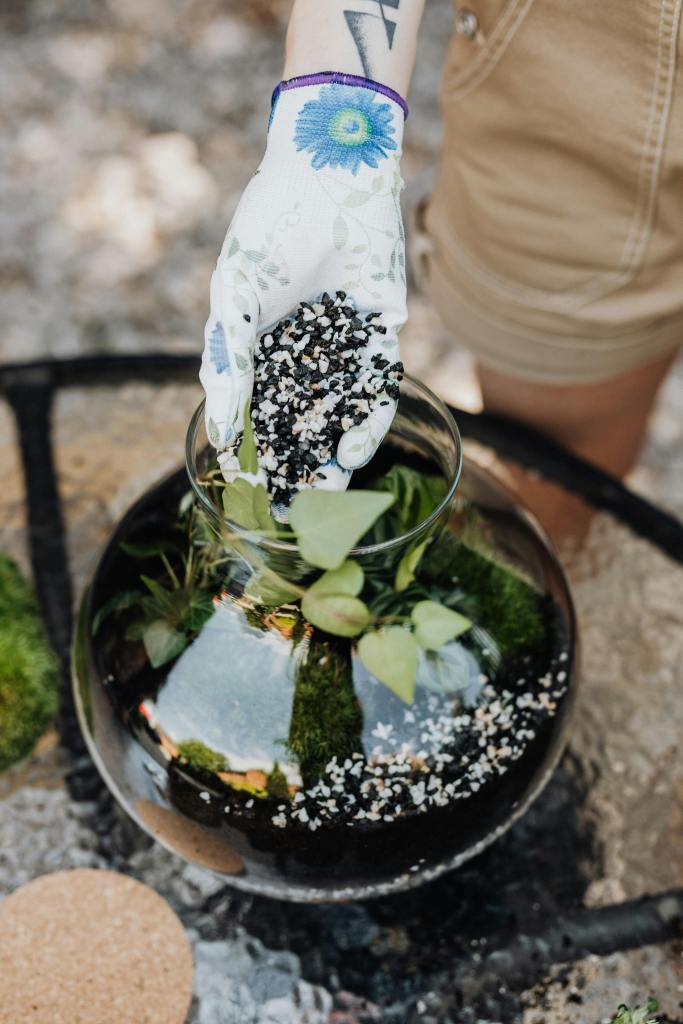
This is important: Add a little water down the side of the container. Use either tap water that has stood out to get rid of the chlorine, or bottled water. Cover and set in indirect, bright light. Never place a terrarium in direct sunlight, as the reflection on the glass will burn the plants. If condensation builds up, remove the cover to let it evaporate, then recover. Remove any standing water on the soil with a syringe or turkey baster.

Water your terrarium only when the soil feels dry. You shouldn’t need to water more than every two to three weeks, or less. For the first few weeks, watch carefully for condensation buildup and puddling, and in a short time, you’ll develop a routine for watering. Overwatering is the biggest cause of failure. And since you don’t really want these small plants to grow very big (or they’ll have to move), fertilize sparingly with diluted houseplant fertilizer to provide the nutrients needed.
As your plants grow, remove any dead leaves and flowers. If the plants get leggy, they need more light. If tips turn brown or yellow, water less. The key to success is choosing the right types of plants, not overwatering, leaving room between plants for air circulation, and keeping the container out of direct sunlight.
Some plants for terrarium or glass container gardening include miniature roses, African violets, Johnny-jump-ups, small table ferns, cacti, aloe, wax begonias, small leaved ivy, coleus, and strawberry geranium. Just remember to check their individual growing needs and group them accordingly. Happy Growing!

 livingbewitchingly.com