

Gardening is a great way to get your children interested in nature, and to teach important lessons about life. But there are many other basic skills that children can learn even before they attend school, and the garden is the perfect place to teach them.
Patience – waiting for seeds to germinate teaches children patience. They learn that they cannot nag, whine or demand the seeds to sprout faster. They learn that different seeds sprout at different rates, and plants grow at different speeds, just like people.
Planning – talking to your child about what plants they want to grow helps a child learn to choose proper plants for their garden size, location, and time they have to spend taking care of the plants.

Writing – even before your child can write or knows the alphabet, they can learn to journal their gardening experiences. Let them draw simple pictures of the plants they are growing in the garden. With help from an adult to write information about the plants, even the youngest child learns the value of writing down information they learn long before school asks them to take notes.
FREE GARDEN JOURNAL FOR KIDS
Happy Gardening! We have a FREE coloring and activity journal for kids!
Click on the link below and download or print as many of the daily pages as you’d like. Grab your gardening tools, along with some crayons and colored pencils and head out to the garden with the kids. HAVE FUN!
Pride – showing their friends and family the garden they planted, and eventually the plants they harvested, gives children a sense of pride in accomplishment. They appreciate the praise they receive and learn that working on a project until completion brings satisfaction and joy.
Teamwork – working with mom and dad or big brothers and sisters on a family project teaches children the importance of every person’s contribution to the job. Even if your only involvement is trying to help them choose the right plants, they are learning the value of other people’s knowledge. Letting them grow vegetables and plants that the family can enjoy and involving them in the cooking process gives importance to their contribution.

Discovery – finding bugs and identifying animals in the garden makes children curious and wanting more. Children are naturally curious, and nature has so many curiosities that pique their interest. Help them find pictures in magazines and catalogs of the creatures they discover in the garden, and keep them in a scrapbook. Get books about the things that fascinate them and read to them if they can’t read yet. Have a story time for their friends to visit the garden and learn. Different textures, colors and shapes of leaves can also be found. Discuss and press leaves in a book to make crafts with.
Memory skills – this one works two ways. You want to create memories for your children to draw on all their lives. Take pictures (let them if they’re able to) throughout the growing cycle of the plants your child is growing. Include them and their friends in the pictures. You’ll see how they’re growing along with the garden! Also take pictures of any crafts they created from and for the garden. But you can also improve your child’s memory skills by playing games that are garden related. Cut pictures of plants, tools, bugs, birds and animals that are in the garden from magazines and catalogs. Create a matching game by gluing these pictures to cards and making cards with the names. Your child is developing a memory skill that will be used into adulthood. Create themed gardens based on your children’s favorite stories. Or seek out an alphabet in the garden for the very young, observing plants, bugs and animals from a to z. Create a journal to track the growth of their garden. Help them draw pictures of the leaves and flowers on their plants and let them identify each one. Limitless opportunities to build memory skills!
Creativity –endless opportunities exist in the garden for bringing out your child’s creativity. Let them make a scarecrow with old jeans and a long sleeved shirt. Stuff an old pillowcase and let them draw a face. Put an old straight tree branch through the shirt back and into the pillowcase. Stuff it all with old leaves or recycled plastic bags. Or create plant markers with seed packs, craft sticks and clear shelf liner. Create stepping stones, paint clay pots, make sundials . . . anything is possible!
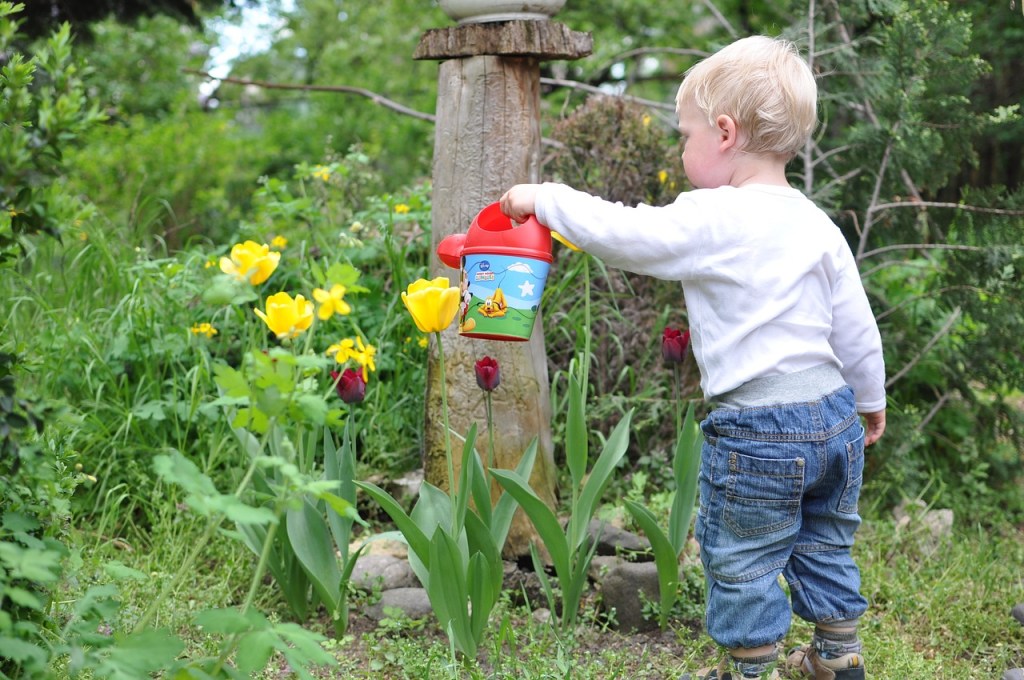
Scheduling – kids learn that plants need water to grow, and if it doesn’t rain, it’s time for the hose or watering can. You could help them place a rain gauge in the garden to keep track of the rainfall. You might want to jot down this info in a journal. They will also learn that weeds need to be pulled before they get too big and take over. They’ll start to see that they have to check every few days to keep up with these weeds. And they’ll learn when vegetables are ready to be picked, based on the information on their seed packs.
Measuring – use rulers, tape measures and yard sticks to teach your children how to measure. Show them on the ruler how tall an 8” flower will be. Use the tape measure to show how long the pumpkin vine will grow. A yard stick can show how tall a sunflower could be by summer’s end. And the rain gauge will help them identify when the garden has had the needed 1 inch of weekly rain. They’ll be ready for math well before school starts!
Safety – a definite skill for the gardener of any age. Show your children pictures of dangers in the garden, like ponds, pools, harmful plants, stinging insects, dangerous tools. Without scaring them, give them a lesson in garden safety and supervise the time they spend there. Sitting and updating your own gardening journal while they work in their garden bed gives them the independence they need while still keeping an eye on them.
As you can see, there are so many things that the garden can teach your children, all of which will be with them throughout their lives. These skills can help develop the artist, scientist, mathematician, doctor or teacher of the future. By encouraging gardening in young children, you are preparing them for a lifetime of learning.

 livingbewitchingly.com