
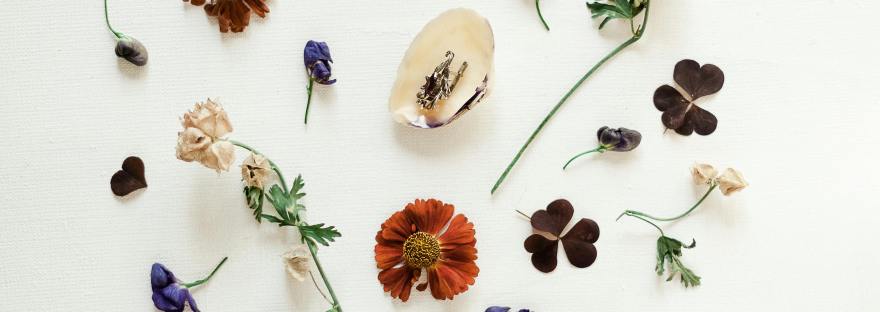
Summertime, and the garden is in full bloom. Beautiful fresh cut flowers and arrangements have a limited lifetime for enjoyment. You can preserve your beautiful flowers and enjoy them for years.

Pressing allows you to pick flowers at their peak or at various growing stages and store them for future use. They can then be added to limitless projects – scrapbooking, framed pictures, picture mats, greeting cards, invitations, home décor, and even jewelry! Think of all the gift ideas you could have for every occasion.
Whole flowers are not the only choice when pressing. Stems, buds, or single petals. which emphasize the shape and veining that can be lost when pressing a whole flower, offer more variety. Pick a few leaves as well! Enjoy the pursuit and selection of each specimen, whether in your garden, out in the wild, or in a flower shop. Keep sharp scissors with you and cut sparingly, especially in the wild, so as to preserve the integrity of the plant and not harm its growth. Bring your flower press or several small plastic bags. Use twist tie bags rather than zip tops, as you want to blow a little air into the bag, and seal it until you get home. This should keep them fresh for an hour or two – longer and they will start to decay. Pick a variety of flowers, grasses, leaves, stems, tendrils and seed heads. Avoid plants that are fleshy, such as succulents, as they hold too much water to press. And always be aware of any endangered species that should not be touched. Be careful, too, not to pick poisonous plants such as poison ivy or oak. Become familiar with native plants in the wild and any you’re not familiar with that are popping up in the garden.

Pick in the middle of a sunny day, after all dew has evaporated. Pick large and small flower heads – flowers with large clusters of petals can be separated before pressing. Press cut flowers from the store as soon as possible. Don’t wait till they start to wilt in the vase. Remember, the more variety of color, shape, veining, stems, buds, and textures you pick, the more options you’ll have for your arrangements.

The process is simple. Sandwich a flower between layers of blotting paper. Start with the cardboard, then a dozen pieces of newspaper, then blotting paper. Place flowers on this stack, then reverse this order of papers for the next bunch. If using a flower press, increase the pressure by tightening a little each day for a week. Leave for the next 6 to 8 weeks until all flowers are dry. If you don’t have a press, use a heavy book and add weight on top. Store dried flowers flat in a box, separated by acid free papers.
Creating art with pressed flowers is an inexpensive hobby, requiring very little equipment. Most of the tools are common household items or can be easily obtained. The list includes:
Latex adhesive – small acid free dots used for scrapbooking can be used for some applications
Toothpicks – to transfer adhesive onto backs of leaves and petals
Tweezers – round nose, so they don’t tear the delicate flowers and leaves, for positioning
Scissors – large and small for cutting base and flowers
Compass and ruler – to help create your design layouts
Design Base – card stock, boards, paper, wood, fabric (satins, silks, velvets, cotton), metal, plastic
Various paints, markers, pencils – to enhance your beautiful art design

 livingbewitchingly.com